
I like to share my thoughts on theological and philosophical topics. I am also a student working through an MDiv and occasionally share papers on the blog. If you have any questions on a paper or blog post, send me a message! I’d love to talk with you about it.
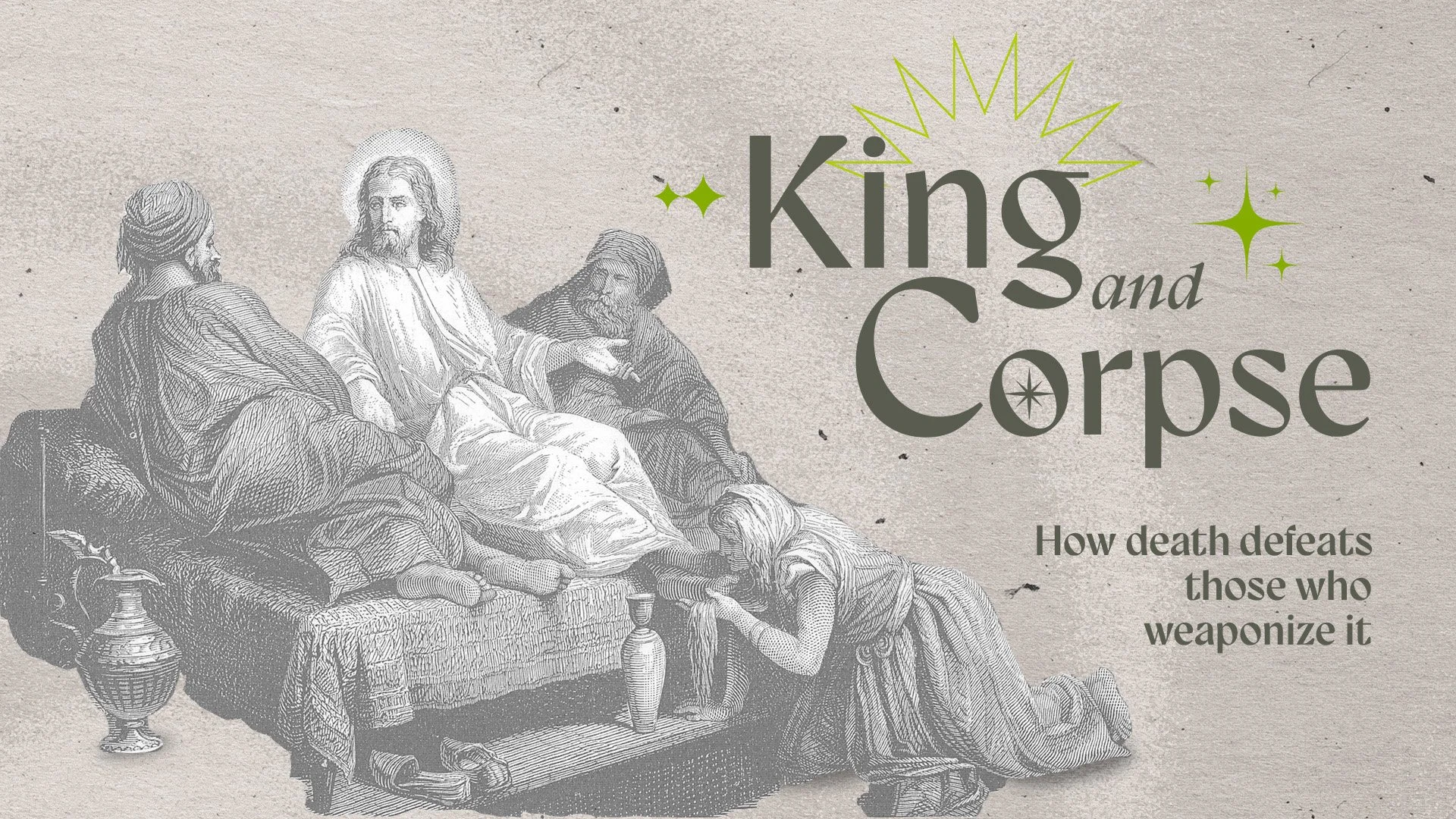
King and Corpse
Explore the meaning of Mary anointing Jesus at Bethany in John 12 and how it reveals a powerful gospel truth: Jesus becomes both King and sacrifice. This reflection connects Lazarus’ resurrection, the triumphal entry, and early Christian theology to show how Christ transformed death into the pathway to victory, hope, and eternal life for believers.
Dear Christian,
Are you afraid of death?
I have good news. It’s in a beautiful story with feet washing and expensive perfume.
The story of Jesus being anointed at Bethany carries bizarre imagery when you first read it. It appears in each gospel, with unique differences across all four, but I’m approaching this story from John 12.
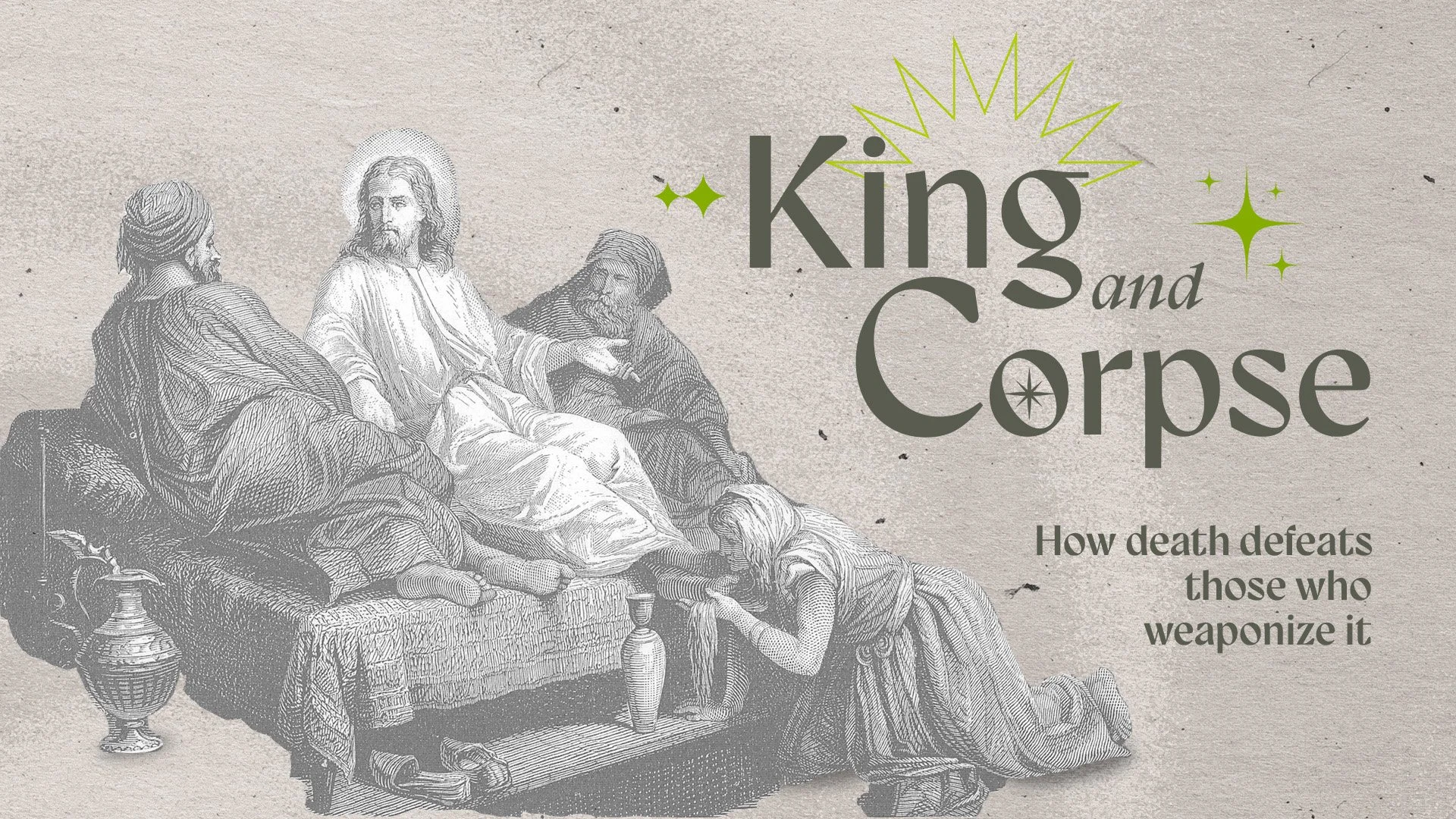
Mary, the sister of Lazarus, the man who has just been raised from the dead by Jesus (11:1-44), takes a jar of perfume that is likely worth a year’s wages and pours it over Jesus’ feet. It is an act that recognizes Jesus’ kingship and glory on one hand, and his service to the world and God's clear mission on the other: Jesus is both the Son of Man and the Son of God, crowned in greatness but elevating (literally “raising” in Lazarus’ case) those suffering and suppressed with his position. (An important note: The “Son of man” references strongly link Jesus to the eternal humanlike figure who inherits kingship in Daniel 7, and the “Son of God” references link him to God’s son in Psalm 2. This is prophetic language.)
There’s an Ebeneezer Scrooge-like character in the story, Judas Iscariot, who finds the symbolic anointing act wildly impractical and a waste of resources. Of course, John tells us plainly that Judas is Jesus’ betrayer, so we know right away that stewarding resources isn’t actually his concern: He could not care less about Jesus receiving honor and glory, as Judas is the one who will usher in immeasurable shame upon Jesus and use God’s resources to benefit himself. In a sense, he is the antithesis of Jesus in this story: Where Jesus uses his power and glory to elevate others (Lazarus, the lame man at the pool, the blind man, the 5000 hungry listeners, the official’s son), Judas uses his access to Jesus for the complete opposite.
But all of this leads us to something truly beautiful in the narrative, yet kind of hard to see unless you zoom out and remember the macro picture of the gospel of John. All the cues are given to us in the prologue: Jesus is YHWH, the God of the Cosmos, who entered His creation and intentionally made Himself vulnerable to elevate us to intimacy with Him (Phil. 2:5-11). He comes in a way where His glory can be observed, “The Word became flesh and dwelt among us. We observed his glory, the glory as the one and only Son from the Father, full of grace and truth” (John 1:14). Yet many people don’t notice this glory at first, and some never do: “He was in the world, and the world was created through him, and yet the world did not recognize him” (1:10). The author of John’s gospel warned us that Jesus is truly the full glory of God wrapped in flesh for our sake, but people don’t recognize Him and often completely miss what the source of His glory is.
Let’s jump back to John 12: Jesus rebukes Judas for completely missing the point, but Jesus doesn’t correct him by saying, “I’m God, king of the universe, and I deserve all the kingly glory that comes from this lavish display of adoration.” Now, don’t get me wrong: this is absolutely a kingly, worshipful display, and Jesus does not reject it as such; he deserves every bit of it and more. But Jesus addresses an entirely different kind of glory: He says, “Leave [Mary] alone; she has kept it for the day of my burial. For you always have the poor with you, but you do not always have me” (12:7-8).
Jesus addresses and praises the act of anointing his feet, but says it’s for his burial.
Not to elevate him on his kingly throne, not to inaugurate his kingdom, not to ignite a chorus of universal worship—even though all of those things are certainly at play and on the table here.
The lavish display of worship finds fulfillment in his death.
What?
New Testament scholar Edward Klink perfectly coined this narrative: He says Jesus is anointed as both “King and Corpse.”
This is where the narrative really hits, and where King and Corpse weave this beautiful truth into a garment that covers you and me forever.
Kings are anointed for coronation.
Corpses are anointed for burial.
The road to glory is trodden through death.
Not instead of death.
Not around death.
Not in spite of death.
Through it.
John merges these two realities together. Scholars often note that John is reframing kingship itself here:
Jesus is not crowned first and killed later; He is enthroned through death.
Christians in the modern era have, in my humble opinion, lost sight of this. The very first gospel, the protoeuangelion, declared this reality in Genesis 3, when God told the serpent his head would be crushed, but man’s heel would be bruised. That bruising is physical, tangible death. But physical death for those who belong to the kingdom of God itself becomes the crushing and triumph over evil, accomplished in Christ first, the forerunner who prepares the way for us (Heb. 6:20).
I’m not surprised the modern Christian view of death has shifted. The mid-nineteenth century saw some of the most frightening encounters with death in America: Cholera pandemics, Yellow fever outbreaks, Tuberculosis deaths across cities, and the Civil War, where around 750,000 people died, entire communities were devastated, families lost multiple sons, and the afterburn of battlefields looked apocalyptic. It’s no wonder William Miller promised people the rapture would happen between 1843 and 1844: Everyone wanted to escape death, and that spirit of fear hasn't loosened over the last century and a half.
But the early Church did not see death as defeat; they saw it as participation in Christ’s victory. Ignatius of Antioch saw death as the culmination of being truly united with Christ: “When I suffer, I shall become a freedman of Jesus Christ, and I shall rise free in Him” (Letter to the Romans: 6). Ignatius recognized what John is preaching, that Jesus is crowned as he’s killed. This finds even greater emphasis in the very next narrative when Jesus triumphantly enters Jerusalem and is celebrated by Galileans while being snubbed by Jewish elites. The Roman parousia (arrival) was an imperial display of power and glory: Caesar would receive a royal procession where he rides through the city gates on his war horse, touting his captives behind him in chains and proving his mighty victory.
But now, juxtapose that image with Jesus and his parousia:
Roman Triumph Jesus’ Triumph
War horse Donkey
Military victory Coming crucifixion
Captives displayed King who will die
Jesus rides in on an animal that symbolizes peace rather than war. He suffers under the violence of Roman crucifixion rather than inciting his own violence, but in doing so, he militarily conquers the spiritual powers of evil. He doesn’t display Roman governors or the Sanhedrin in shame behind him, but instead takes on all their shame at the cross, shaming evil and rebellious principalities instead (Col. 2:15). He truly is both King and Corpse, and disarms death by walking through it to resurrection. Through death, Jesus defeated the one who has power over death (Heb. 2:14-15). This is the very reality John’s gospel is preparing us for.
You might be reading this and thinking, “Joey, stop glorifying death. It’s evil and bad, and it hurts terribly.”
Yes, I agree. Death is an enemy, even personified as an evil being in the Old Testament, and it will be destroyed at the next great arrival of Jesus, the parousia. My point, and John’s point, and the apostle Paul’s point, and the prophet Hosea’s point, and the prophet Isaiah’s point (1 Cor. 15:55; Hos. 13:14; Is. 25:8), is that death has no sting, no power, and no reason to cause fear. Death is the operation through which death itself becomes life. It is entirely subverted for God’s glory.
Death has been swallowed up in victory. Where, O death, is your victory? Where, O death, is your sting?
So dear Christian, do not fear death. Remember the perfume at the feet of Jesus, where preparation for death was the coronation of the God of the universe, who paved the way for you to spend eternal life with Him in His new creation.

Sexual Immorality, the Human Body, and Community Holiness.
It all begins with an idea.
Paul’s first address to the church in Corinth articulates a unique theology of the human body and its purposes in God’s inaugurated kingdom on earth. In examining 1st Corinthians 6:12-20, Paul addresses boundaries and abuses of freedom in the Christian life (6:12-13), God’s purpose for the human body in Christ (VS 14-20), the sinful practice of sexual immorality against both the body and the Lord (VS 14-18), and communal holiness for the collective church as Christ’s body (15-20). This paper will endeavor to explain and support the position that Paul’s theology of the human body, explicitly expressed and supported in this passage, was unique in Paul’s day and is coherent and consistent within greater Pauline literature. It will begin by addressing the wider issue at stake in Paul’s entire letter to the Corinthians.