
I like to share my thoughts on theological and philosophical topics. I am also a student working through an MDiv and occasionally share papers on the blog. If you have any questions on a paper or blog post, send me a message! I’d love to talk with you about it.
Anxiety-Driven Theology: pt 4
Judges is not a simple cycle of sin and rescue; it is a downward spiral in which Israel becomes increasingly shaped by the powers it was called to resist. From Othniel’s clean deliverance to Ehud’s unsettling violence and Gideon’s transformation from fearful deliverer into a mirror of Midian, this essay explores how anxiety can reshape theology, worship, and power. Drawing on the “Canaanization of Israel,” the blog connects Judges to the larger biblical story of idolatry, empire, and false security, then turns the mirror toward the modern Church. When fear promises safety, strength, and cultural control, we may believe we are resisting evil while slowly becoming like it. Judges asks a haunting question: are we being formed by YHWH, or discipled by the powers we claim to oppose?
The book of Judges is one of the most brilliant and provocative pieces of ancient literature we have. It is a brutal theological mirror, showing what happens when God’s people become addicted to the very powers they were called to resist.
Old Testament scholar Daniel Block describes the central theme of Judges as the “Canaanization of Israel.”
That phrase will always punch me in the gut when I read or write it.
God called Israel to be a holy people in the land, a living witness to the surrounding nations of what life under YHWH could look like. But by the end of Judges, you can hardly tell Israel and the nations apart. Israel does not expand the worship of YHWH into Canaan as much as Canaan expands its violence and idolatry into Israel.
This is the fourth blog in a series exploring the Old Testament’s critique of idolatry, anxiety, and imperial power. In the first three blogs, I argued that Israel’s problem was never just external oppression, and that Egypt and Babylon represent more than hostile nations; they represent rival visions of security, provision, worship, and identity. Israel is repeatedly delivered from Empire while still craving the comforts Empire provides.
The story begins with Jacob’s family settling in Egypt during famine. What starts as temporary refuge slowly becomes assimilation. Israel adopts Egypt’s gods, embraces on Egypt’s systems and structures, and eventually finds itself enslaved by the very system that once preserved it.
Then YHWH sends Moses to lead Israel out.
But deliverance does not undo their imperial desires. In the wilderness, Israel repeatedly longs for Egypt’s food, Egypt’s predictability, and Egypt’s visible security. Then, at Sinai, while Moses is on the mountain, the people panic. Anxiety drives them back into familiar worship. They gather gold, construct a calf, and dress Egypt’s image in YHWH’s name.
That is anxiety-driven theology.
Israel is called to bear the image of YHWH, but under pressure, they mirror the image of the powers that formed them.
Judges shows what happens when that pattern is no longer a moment at Sinai, but a way of life in the land. In Judges, Israel no longer craves for Egypt from the wilderness; Israel becomes Egypt inside the land. The golden calf was a crisis, and in Judges, that crisis becomes culture. The book starts with deliverers who rescue Israel from outsiders. It ends with Israelites acting like outsiders toward one another.
Let’s dive in.
First things first: the opening chapters of Judges function like a prologue. The book is not meant to be read as a flat chronology of Israel’s early years in the land. It is theological storytelling. It is history preached through blood, irony, satire, and tragedy.
Judges 1-2 gives us the overview. Judges 3 begins to show us the pattern in motion.
Israel worships the Baals and the Asherahs, assimilating into the pagan ecosystem of the land. They are then given over to a king named Cushan-rishathaim, whose name lands almost like a caricature: “Cushan of double wickedness.” He is not just a foreign king; he is a literary embodiment of the kind of human power Judges warns us about.
Judges is not simply telling us, “Israel needed better politicians.” It is exposing the danger of pagan kingship itself: domination baptized as strength, violence dressed up as security, power claiming divine authorization for itself. Scripture is not allergic to leadership, but it is deeply suspicious of the kind of royal power that turns human beings into tools and calls it “peace.”
YHWH responds by raising up Othniel, who is connected to Caleb, one of the last of the Joshua generation's golden age. The Spirit of YHWH comes upon him; he judges Israel, goes to war, and delivers the people. Cushan-rishathaim, the “doubly wicked” king, falls before the Spirit-empowered deliverer.
It is almost too clean.
The wicked king faces the faithful judge, and the faithful judge wins.
Othniel is the closest Judges gives us to a straightforward hero. He represents the clean version of the pattern: Israel rebels, oppression follows, Israel cries out, YHWH raises a deliverer, and the land has rest.
That clean version does not last.
Many people describe the book of Judges as Israel’s “cycle of sin.” Judges is not a cycle, though. It is a spiral.
A cycle returns you to where you started. A spiral takes you lower every time.
Israel does not simply fall, repent, and bounce back. Israel becomes progressively more conformed to the nations around them. Each rescue is followed by deeper compromise. Each deliverer is a little more complicated. Each victory carries more shadows. The people are not just repeating sin; they are being discipled by it.
Let’s look at Ehud.
Israel does evil again, and YHWH strengthens Eglon, king of Moab, against them. Even his name carries satire. Eglon means something like “little calf” or “calf-like,” which is fitting because the story paints him as a bloated ox-king headed for slaughter. Judges wants you to feel the mockery. This is imperial power with a full belly, sitting behind locked doors, fed by Israel’s tribute.
This time, YHWH raises up a much stranger deliverer.
Ehud is from the tribe of Benjamin, which means “son of the right hand.” But Ehud is left-handed. The irony is dripping. He is a left-handed man from the right-handed tribe. From the beginning, something about him is off, inverted, maybe even unsettling.
And unlike Othniel, the Spirit of YHWH is never said to come upon Ehud.
YHWH isn’t absent from the story. He raises Ehud up (3:15). But the narrator wants us to notice the change in tone. Othniel embodies Spirit-empowered deliverance. Ehud embodies secrecy, deception, hiddenness, and political assassination.
He gains access to Eglon by leading the tribute offerings, the payment of Israel’s subjugation. Then he returns with a private “message from God,” conceals a double-edged dagger on his right thigh, and drives it into the belly of Moab’s calf-like king.
The scene is darkly comic, violent, and grotesque. It is deliverance, yes, but not clean deliverance.
Already, Israel’s salvation is starting to come through methods that feel uncomfortably close to the world of its enemies. The good guys are not quite as clean as they were in Othniel’s story. The tools of rescue are beginning to look like the tools of empire: secrecy, manipulation, assassination, and blood behind locked doors.
The story celebrates Moab’s defeat and Israel’s freedom. But Judges is brilliant because it lets the victory feel both satisfying and unsettling.
Othniel gives us the golden ideal. Ehud gives us a complicated darkness. By the time we get to Gideon, that darkness gets really disturbing.
Gideon is riddled with anxiety, and by the end of his narrative, anxiety hasn’t just weakened him; it has formed him.
We first meet him threshing wheat in a winepress, hiding from Midian (Jud. 6:11). His brothers have been killed by Zebah and Zalmunna, and Gideon is the surviving son carrying fear, grief, and buried vengance. He is, quite literally, a kinsman redeemer (8:18-21).
YHWH repeatedly calls Gideon into courage (6:12–18, 22–24, 36–40; 7:9–11), but Gideon is a long way from Caleb, Othniel, and faithful obedience. At first, we think we are watching a timid warrior learn to trust God.
Gideon’s narrative is so much more unsettling than that.
Gideon is not simply afraid of Midian. He is becoming Midian. The man called to deliver Israel from pagan power begins to imitate that power.
After capturing Zebah and Zalmunna, Gideon asks,
“What kind of men did you kill at Tabor?” They answer, “They were like you. Each resembled the son of a king.” Gideon replies, “They were my brothers, the sons of my mother!” (8:18–19).
Wow. What a line! The Midianite kings recognize kingly features in Gideon’s family. Remember, In Judges, kings represent pagan hunger for domination, security, and self-exalting power. Here, the kings of Midian look at Gideon and his brothers and see a familiar face.
Gideon may be fighting Midian, but Midian is staring back through him.
The motif intensifies when Gideon turns his violence inward. The elders of Succoth refuse to feed his exhausted men while he pursues the Midianite kings. They're cowards, sure, but Gideon’s response is brutal. Imperial even. After the victory, he returns, takes thorns and briars from the wilderness, and tears into the elders’ flesh. Then he destroys the tower of Penuel and kills the men nearby (8:13–17).
Does this sound like the justice of YHWH? Or like the savagery of the nations Israel was called to resist?
The hand YHWH used to break Midian turns around and crushes Israelite towns.
By the end of the story, Israel asks Gideon to “rule over us” (8:22)—language the narrator has not used of any judge before him. The people are anxious, and anxiety always looks for a throne.
Give us someone strong. Give us someone scary. Give us someone who can beat violence with more violence.
Bigger and badder starts to feel like salvation.
Gideon gives the right answer: “I will not rule over you… YHWH will rule over you” (8:23).
But then he does the same thing Abraham did when he was anxious. The same thing Jacob’s children did. The same thing Aaron and the Israelites did. They remake YHWH in the pagan image they can control.
He asks Israel for the gold earrings plundered from Midian and uses them to make an ephod (a priestly garment associated with Israel’s worship). He sets it up where his father’s Baal altar once stood before YHWH told Gideon to tear it down (6:25–32; 8:24–27).
The story begins with pagan worship in Gideon’s backyard and ends with Gideon building a new idol in the same spot.
The author of Judges is a genius. Gideon does not reject YHWH with his mouth. He dresses pagan worship in Israelite clothing. Literally. An ephod. The golden calf was made from deliverance gold; Gideon’s ephod is made from victory gold. In both stories, Israel takes God’s gifts, melts them down, and turns them into something they can manage. Something that looks like empire.
Just like Israel mirrored the golden calf, Gideon mirrors the kings of Midian.
Israel wanted YHWH to displace Pharaoh. Now they want Gideon to displace the Midianites. Both times, they want to keep the empire, just get rid of the leader who abuses them.
We may think we are fighting a holy war against evil while becoming the thing we claim to oppose. Anxiety does strange things to theology. When we’re afraid, we reach for whatever promises survival, then baptize it with Christianese so we don’t have to call it idolatry.
Think of the culture wars you have been told to wage.
Think of the “spiritual warfare” lurking behind everything you dislike.
Think of the “blessing of God” allegedly at stake if you do not secure your freedom, your economy, your tribe, your culture, your religious preference.
I’m not saying every political concern is fake or every cultural fear is foolish. I’m saying that fear is a terrible theologian. It hands you a sword, tells you to call it righteousness, and convinces you to swing it at your neighbor.
So ask yourself: am I being discipled by YHWH, or recruited by Midian? Am I building the kingdom of God, or have I dressing up and fighting for the systems that make me feel safe?
Anxiety-Driven Theology: pt 3
My claim is that the Old Testament tells a repeated story: Israel did not merely want Yahweh to deliver them from Egypt. They wanted Yahweh to displace Pharaoh and let them keep Egypt.
This blog focuses on one of the most crucial idolatry narratives in all of Scripture: the making of the golden calf at the foot of the mountain of God.
Most people rightly recognize that the golden calf story is not merely about a bad religious statue. It is about what the statue reveals. At Sinai, Israel exposes the image it has been carrying in its heart. The people delivered from Egypt still know how to think, fear, worship, and organize themselves like Egypt.
This is the third blog in a series highlighting Israel’s idolatry, assimilation, and dependence on Empire.
My claim is that the Old Testament tells a repeated story: Israel did not merely want YHWH to deliver them from Egypt. They wanted YHWH to displace Pharaoh and let them keep Egypt.
This blog focuses on one of the most crucial idolatry narratives in all of Scripture: the making of the golden calf at the foot of the mountain of God.
Most people rightly recognize that the golden calf story is not merely about a bad religious statue. It is about what the statue reveals. At Sinai, Israel exposes the image it has been carrying in its heart. The people delivered from Egypt still know how to think, fear, worship, and organize themselves like Egypt.
Much of what I am working through here leans heavily on the scholarly work of G. K. Beale, Christopher Wright, Richard Lints, and Walter Brueggemann.
Let me refresh the scene.
Israel has settled in Egypt, assimilated into Egyptian life, and depended on Egyptian systems of provision and worship. They don’t return to the land promised to Abraham. Eventually, the empire they trusted for prosperity becomes their slave driver. The people cry out to YHWH. He hears them, sends Moses to confront Pharaoh, wages war against the gods of Egypt, and delivers Israel from bondage.
Then He brings them to a mountain in the wilderness.
This is key. Catch this.
Sinai is not just a religious stop on the way to the promised land. Sinai is the place where YHWH invites Israel to become what Adam was created to be in the beginning: a people who bear His image in the world.
Exodus says:
They traveled from Rephidim, came to the Sinai Wilderness, and camped in the wilderness. Israel camped there in front of the mountain. Moses went up the mountain to God, and the LORD called to him from the mountain: “This is what you must say to the house of Jacob and explain to the Israelites: ‘You have seen what I did to the Egyptians and how I carried you on eagles’ wings and brought you to myself. Now if you will carefully listen to me and keep my covenant, you will be my own possession out of all the peoples, although the whole earth is mine, and you will be my kingdom of priests and my holy nation.’ These are the words that you are to say to the Israelites.”
Exodus 19:2–6
There is not enough space to unpack everything happening here, but the core idea is This: YHWH is reclaiming a people for Himself in the face of the gods and empires of the surrounding nations. Israel is being invited to become God’s visible, living representatives in His world.
That is why the command not to “misuse the name of the LORD your God” is about far more than cussing or saying, “Oh my God” (Exodus 20:7). This goes beyond speech. Israel is going to carry God’s name into the world. They will bear His reputation with their life together.
In other words, YHWH is saying, “Do not carry my name while misrepresenting my character.”
Then, only a few chapters later, Moses is up on the mountain with God. But he is gone longer than expected. Israel’s anxiety starts to build. They have not seen Moses in days, so they approach Aaron and say:
“Come, make gods for us who will go before us because this Moses, the man who brought us up from the land of Egypt—we don’t know what has happened to him!” (Exodus 32:1)
The people start it, but Aaron goes along with it. He collects their gold, gathers it together, and fashions it into “an image of a calf.”
This is very important.
Israel has just been invited to become YHWH’s image-bearing people. Genesis calls this human vocation the imago Dei, the tselem (צֶלֶם) of God. But in their moment of fear, Israel chooses another image, the massekah (מַסֵּכָה). They do not wait on YHWH’s invisible presence. They manufacture a visible object of power they remember from Egypt.
Some scholars connect the calf to the Egyptian god Apis, but that may press the evidence too far. Exodus does not clearly define Apis worship. Bulls and calves were common symbols throughout the ancient Near East for divine strength, fertility, royal power, and pagan presence.
The point is not that the calf must be one specific Egyptian deity. The stronger point is that Israel reaches for a familiar ancient symbol of visible power and tries to attach YHWH’s name to it.
Whether the calf evokes Egyptian Apis worship, broader ancient Near Eastern bull symbolism, or later northern Israelite calf worship, the theological critique remains: Israel turns the invisible God who liberated them from Empire into a visible object shaped by Empire’s imagination.
Israel uses deliverance gold to manufacture a god-shaped object from imperial memory.
The gold they plundered from Egypt becomes the material they use to imitate Egypt. The tools God gave in their deliverance become the substance of their idolatry.
That is what anxiety does when it goes unhealed. It takes God's gifts and melts them down into something we habitually try to control.
Then YHWH says to Moses:
Go down at once! For your people you brought up from the land of Egypt have acted corruptly. They have quickly turned from the way I commanded them; they have made for themselves an image of a calf. They have bowed down to it, sacrificed to it, and said, ‘Israel, these are your gods, who brought you up from the land of Egypt.’ The LORD also said to Moses, ‘I have seen this people, and they are indeed a stiff-necked people.’”
Exodus 32:7-9
YHWH calls Israel “stiff-necked” (Ex. 32:9; 33:3; 34:9). He says, “they have quickly turned away” (32:8). The author says, “Aaron had let them get out of control” (32:25) and that they needed to be “gathered together” again, “in the gate” 32:26).
This is language of a stubborn, rebellious bull.
God is mockingly noting that Israel does not look like Him: they look like uncontrollable bulls. They look like Egypt’s bulls.
The image is painfully fitting: they have worshiped beastly power and become beastly in their resistance. Israel did not build the golden calf because they forgot God. They built it because they wanted a God they could control. A God that feels like Egypt.
This is baptizing empire.
Aaron even announces a feast “to YHWH.” They do not think they are abandoning God altogether. They are dressing Egyptian-shaped worship in YHWH language. They are giving a pagan object covenant vocabulary. They are trying to worship the God who rescued them from slavery through an image formed by the slavery He rescued them from.
That is the tragedy of Sinai.
Israel is summoned to become YHWH’s image in the world, but instead they mirror the image of their former slave masters.
Then comes the contrast with Moses.
That word “shone” is qaran (קָרַן). It means “emit rays,” but it is derived from the word qeren (קֶרֶן), which means “horn.” The word could be describing two rays of light shining from Moses’ face, like horns extending outward. But the author of Exodus is clever, and there’s probably a double entendre here. Moses’ face reflects the literal glory of God, the strength of His might, and the radiance of His presence. His face appears “horned” (shining) by the glory.
Meanwhile, Israel reflects a different glory: that of the rebellious “horned” idols of Empire.
At the foot of the mountain, Israel reflects the glory of a horned beast made of gold. On the mountain, Moses reflects the glory of YHWH Himself.
Moses communes with YHWH and comes down radiant.
Israel worships the calf and becomes corrupt.
Moses reflects the God he beholds.
Israel reflects the idol of empire.
The people were meant to image God, but they became like what they worshiped. The glory of God was offered to them, but they exchanged it for the image of an animal.
Psalm 106 later mocks this moment with brutal clarity:
“They exchanged their glory for the image of an ox that eats grass.”
That is what idolatry does. It does not merely offend God. It dehumanizes the worshiper.
Israel was called to become a kingdom of priests and a holy nation, but under the pressure of anxiety, they reach backward for the religious imagination of Egypt. They become smaller, less human, less free, and less like YHWH.
This is why Moses’ shining face frightens them.
When Moses comes down from the mountain, the people see a human being actually reflecting the presence of God. They see what they were invited to become, and it terrifies them (Ex. 34:30b). Moses's shining face exposes the ugliness of the image they chose instead.
Moses’ veil, then, is not merely a strange ritual detail. It becomes a symbol of the distance between Israel and the glory to which they were called. Paul later picks up this image, arguing that the veil represents a dullness of perception, a failure to behold the glory of God clearly (2 Cor. 3:12-16).
Israel cannot yet live unveiled before the glory of YHWH because their hearts are still shaped by another image.
And this is the point: you cannot dress the idol up as YHWH.
You cannot dress Babylon in Christian clothes and call it holy.
You cannot ask God to bless Egypt’s gods.
You cannot cover corrupt, unjust, cruel, selfish ambitions with flattened Bible verses ripped out of context and call it biblical faithfulness.
God calls His people up the mountain to leave Egypt, bear His name, become like Him, and bring His kingdom back down the mountain.
The question is whether we are actually doing that.
Or are we afraid of the mountain?
Are we afraid of the wilderness?
Are we afraid of the invisible God who cannot be managed?
Do we grab the securities of the world, melt them down, reshape them into something familiar, slap Christian language on top, and call it “holy?”
Or “biblical?”
Or “Spirit-led?”
The god we are defending often looks a lot like Egypt.
Think about your priorities.
Your time.
Your money.
Your subscriptions.
Your appetites.
Think about our laws.
Our legislature.
Our international policies.
Our economics.
Think about our congregations.
Our community footprint.
Our words toward our neighbors.
Our treatment of the poor, the foreigner, the vulnerable, and the enemy.
Think about your family.
Your kids.
Your friends.
our body.
Your thought life.
Who are you imaging?
It is easy to claim we worship the one true God. It is easy to sing the songs, use the language, quote the verses, and announce a feast “to YHWH.”
But Israel teaches us that we can say YHWH’s name while worshiping Egypt’s image.
We can claim deliverance while still craving the systems that enslaved us.
We can leave Egypt geographically while carrying Egypt liturgically, politically, economically, and spiritually.
The golden calf is not an ancient story about primitive people making a silly statue.
It is a mirror.
And if we are honest, we may not like what we see.
________________
For further reading, pay attention to how often the Old Testament returns to the language of idolatry, describing it as blindness, deafness, and dullness. Deuteronomy 29:4, Isaiah 6:9-10, Psalm 115:4-8, and Psalm 135:15-18 all develop the same terrifying idea: people become like the idols they worship. They have eyes but do not see, ears but do not hear, mouths but do not speak, and hearts that cannot perceive.
That is not just a description of idols. It is a warning to worshipers. We become what we behold.
Anxiety-Driven Theology: pt 2
This second essay in the Anxiety-Driven Theology series explores how fear pulls God’s people back toward the systems that once shaped them. Beginning with Abraham’s journey from Mesopotamia to Egypt and continuing through Israel’s wilderness complaints, the blog traces how Scripture exposes the spiritual seduction of Empire. Israel’s struggle was not merely the worship of false gods, but the deeper temptation to trust visible power, political security, economic stability, and predictable provision more than the presence of Yahweh. This reflection invites readers to examine how anxiety still shapes theology today.
This is the second blog in a series on Israelite idolatry, anxiety, and the spiritual seduction of Empire.
The Old Testament tells the story of a people delivered from slavery who nevertheless struggle to stop thinking like slaves of Empire. Again and again, Israel reaches for the same things Egypt promised: visible power, political security, economic stability, and control over fear. Their problem is not merely the worship of pagan gods, but the deeper impulse to remake YHWH (capital G God) in the image of the pagan systems that make them feel safe.
The central tension of Scripture is not simply God versus idolatry, but Eden versus Empire: covenant trust in the presence of God versus anxious dependence on imperial power.
In the previous blog, I argued that Genesis ends with a strange discomfort: Jacob (whose name is Israel), the descendant of Abraham, is always fixated on Joseph, the future ruler of Egypt. Jacob’s family survives through Joseph’s rise to power in Egypt. What begins as God’s provision during famine slowly becomes Israel’s place of settlement, ownership, assimilation, and permanence. Egypt saves them. Then Egypt begins to form them.
This is where the story gets uncomfortable, but needs to be noticed.
When people read the opening of Exodus, they may assume Jacob’s descendants are faithful worshipers of YHWH trapped inside a foreign empire. But the Old Testament gives us a more complicated picture. Israel was not merely surrounded by Egyptian paganism; they absorbed it.
Ezekiel says:
On that day I swore to them that I would bring them out of the land of Egypt into a land that I had searched out for them, a land flowing with milk and honey… And I said to them, ‘Cast away the detestable things on which your eyes feast, every one of you, and do not defile yourselves with the idols of Egypt; I am the LORD your God.’ But they rebelled against me and would not listen to me; not one of them cast away the detestable things on which their eyes feasted, nor did they forsake the idols of Egypt.
Ezekiel 20:6-8
That is a devastating indictment.
Israel was worshiping Egyptian idols before the Exodus. They were not simply waiting faithfully for God’s promise while biding their time in Egypt. They had become entangled in Egypt’s religious imagination.
This does not justify Pharaoh’s oppression. Israel’s idolatry does not excuse tyrannical abuse. The Bible never asks us to spiritualize away the real violence of oppressors.
But Scripture is doing more than telling us that God rescued innocent people from bad people. It is showing us a people who had become advocates of the very system that eventually enslaved them.
And perhaps we know more about that than we want to admit.
We do not mind getting our meals from a tyrant as long as we are not the ones being beaten. We do not mind the megalopolis as long as our home, business, preferences, and freedom rest comfortably inside its walls. We do not mind Empire when it feeds us, protects us, affirms us, and lets us keep our gods.
This story of assimilation is foreshadowed centuries earlier in the life of Israel’s famous ancestor.
His name, at the time, was Abram. And his story is a preview of Israel’s story.
When we first meet Abram, YHWH calls him to leave Haran in Mesopotamia and go “to the land that I will show you” (Genesis 12:1).
Pay attention to the geography. It matters a lot.
Abram is called out from the world beyond the Euphrates, the region associated with Mesopotamia, Babel, and the old world of ancestral gods. Later, Joshua tells Israel what Genesis only implies:
Long ago your ancestors—Terah and his sons Abraham and Nahor—lived beyond the Euphrates and served other gods. Then I took your father Abraham from beyond the River and led him through all the land of Canaan and made his offspring many.
Joshua 24:2-3
Abram is not a Noah-like figure, faithfully worshiping the true God while surrounded by a corrupt world. Abram is part of that world. He comes from a family that served other gods. His call is not only a change of location; it is a rupture from inherited worship, inherited security, and inherited identity.
Before God calls Israel out of Egypt, He calls Abram out of Mesopotamia.
Before Israel needs an exodus, Abram needs one.
But then famine strikes Canaan, and Abram journeys down to Egypt, just as Jacob’s family will later do through Joseph. The pattern is hard to miss. Famine drives the chosen family toward Egypt. Egypt offers survival. Egypt also threatens the promise.
When Abram realizes he must stay there, his anxiety takes over:
When he was about to enter Egypt, he said to his wife Sarai, ‘I know well that you are a woman beautiful in appearance, and when the Egyptians see you, they will say, “This is his wife”; then they will kill me, but they will let you live. Say you are my sister, so that it may go well with me because of you and that my life may be spared on your account.’
Genesis 12:11-13
If this sounds like a stupid move on Abram’s part, it is.
But it is more than stupidity. It is regression.
Abram is called out of the world of pagan power, but under pressure, he immediately starts thinking like the world he came from. He does not trust the promise. He manages the threat. He calculates survival. He offers Sarai into Pharaoh’s household so that his own life may be preserved. As uncomfortable as it sounds, it was common in the ancient Near East for absolute monarchs to take foreign women as property.
In a moment of anxiety, Abram acts according to the logic of Empire.
That does not mean Abram formally worships Egyptian gods. The text does not say he bowed to a gold statue of Pharaoh. But he does something painfully familiar: he reaches for self-preservation in a way that treats another person as expendable. And that is how Empire always works. Someone else becomes the cost of my safety.
Abram’s fear exposes his formation.
Babylon still lives in his heart, and Egypt brought it to the surface.
This is where Joshua’s covenant speech becomes so important. In the same chapter where Joshua names Abraham’s idolatrous past beyond the River, he also commands Israel:
Now, therefore, revere the LORD and serve him in sincerity and in faithfulness; put away the gods that your ancestors served beyond the River and in Egypt, and serve the LORD.
Joshua 24:14
Joshua links the two old worlds: the gods beyond the River and the gods of Egypt.
Mesopotamia and Egypt.
Abram’s past and Israel’s past.
The world of ancestral idolatry and the world of imperial dependency.
Both must be renounced.
God’s people are not simply called to leave pagan places. They are called to be stripped of pagan formation.
And that stripping almost always happens in the wilderness.
Abram journeys from Mesopotamia toward Canaan. Israel journeys from Egypt toward Canaan. In both stories, the journey is not wasted space between deliverance and destination. The journey is the surgery. The wilderness is where God begins cutting Empire out of the heart.
And Israel does not go quietly.
When they are barely out of Egypt and see Pharaoh’s army chasing them, they cry out to Moses:
Was it because there were no graves in Egypt that you have taken us away to die in the wilderness? What have you done to us, bringing us out of Egypt? Is this not the very thing we told you in Egypt, ‘Let us alone so that we can serve the Egyptians’? For it would have been better for us to serve the Egyptians than to die in the wilderness.
Exodus 14:11-12
Right before they say this, Exodus tells us they were “in great fear.”
There it is again.
Anxiety drives them back toward the very Empire they begged God to rescue them from.
Our new freedom feels dangerous; slavery feels familiar. The wilderness feels cruel; Egypt feels predictable. The presence of God feels insufficient when Pharaoh’s storehouses once made life feel great.
This pattern continues:
If only we had died by the hand of the LORD in the land of Egypt, when we sat by the pots of meat and ate our fill of bread.
Exodus 16:3
Then again:
If only we had meat to eat! We remember the fish we used to eat in Egypt for nothing, the cucumbers, the melons, the leeks, the onions, and the garlic.
Numbers 11:4-5
This is Israel craving the sensory world of Egypt: its foods, flavors, abundance, predictability, and comfort. The manna of God feels boring compared to the diet of Empire.
They want Egyptian cuisine over wilderness healing.
They do not yet realize that the wilderness is designed to strip them of the very dependence they keep romanticizing.
God is not simply moving Israel across geography. He is retraining their appetites. He is teaching them that bread does not ultimately come from Pharaoh’s ovens, water does not ultimately come from Egypt’s irrigation systems, and safety does not ultimately come from imperial power.
This is why Deuteronomy later tells Israel that Canaan will not work like Egypt:
For the land that you are entering to possess is not like the land of Egypt, from which you have come, where you sow your seed and irrigate by foot like a vegetable garden. But the land that you are crossing over to possess is a land of hills and valleys, watered by rain from the sky.
Deuteronomy 11:10-11
Egypt had the gods of the Nile.
Caanan will not operate that way.
Egypt trained people to trust the visible machinery of provision. Canaan would require dependence on rain from heaven. The land itself would become a discipleship environment.
Israel wanted God’s promise, but they also wanted Egypt’s security. They wanted deliverance from Pharaoh, but not deliverance from the world Pharaoh ruled. They wanted God to remove the cruelty of Empire while preserving its comforts.
And honestly, don’t we?
Our fear drives us back into the arms of whatever power promises temporary safety. We baptize our anxieties. We sanctify our survival instincts. We dress our idols in biblical language so they feel Christian enough to keep.
And before we know it, we are not worshiping the God who calls us out of Egypt. We are worshiping the systems of Egypt with God’s name written on top.
That is anxiety-driven theology.
It is what happens when fear becomes the room where we build our doctrine of God.
And the tragedy is that we rarely notice it while it is happening. We do not usually abandon God outright. We simply ask Him to bless the world we already trust. We clear Egypt’s throne and invite God to sit on it.
And when He says, “no,” we ask Him to give us back our garlic.
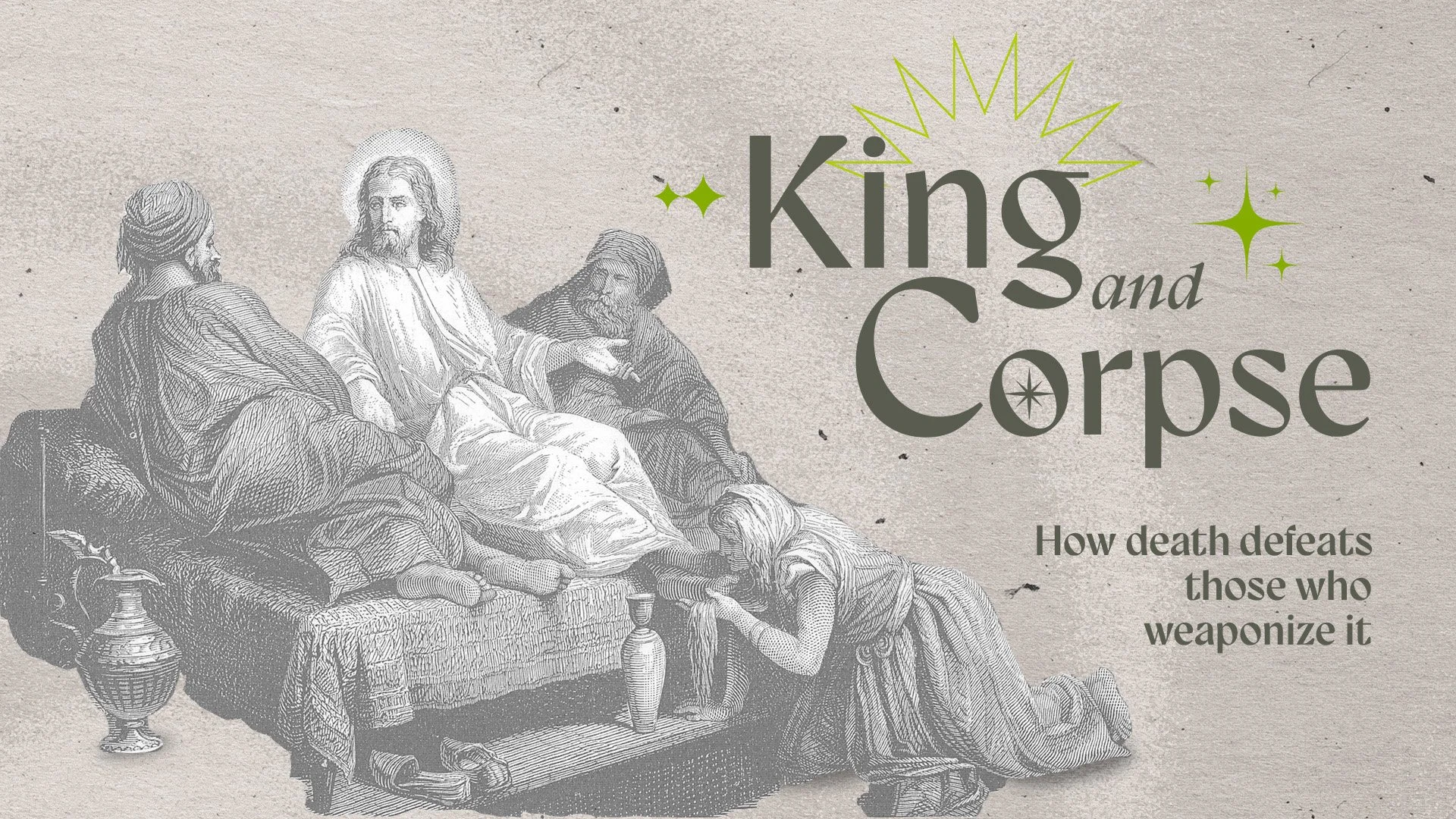
King and Corpse
Explore the meaning of Mary anointing Jesus at Bethany in John 12 and how it reveals a powerful gospel truth: Jesus becomes both King and sacrifice. This reflection connects Lazarus’ resurrection, the triumphal entry, and early Christian theology to show how Christ transformed death into the pathway to victory, hope, and eternal life for believers.
Dear Christian,
Are you afraid of death?
I have good news. It’s in a beautiful story with feet washing and expensive perfume.
The story of Jesus being anointed at Bethany carries bizarre imagery when you first read it. It appears in each gospel, with unique differences across all four, but I’m approaching this story from John 12.
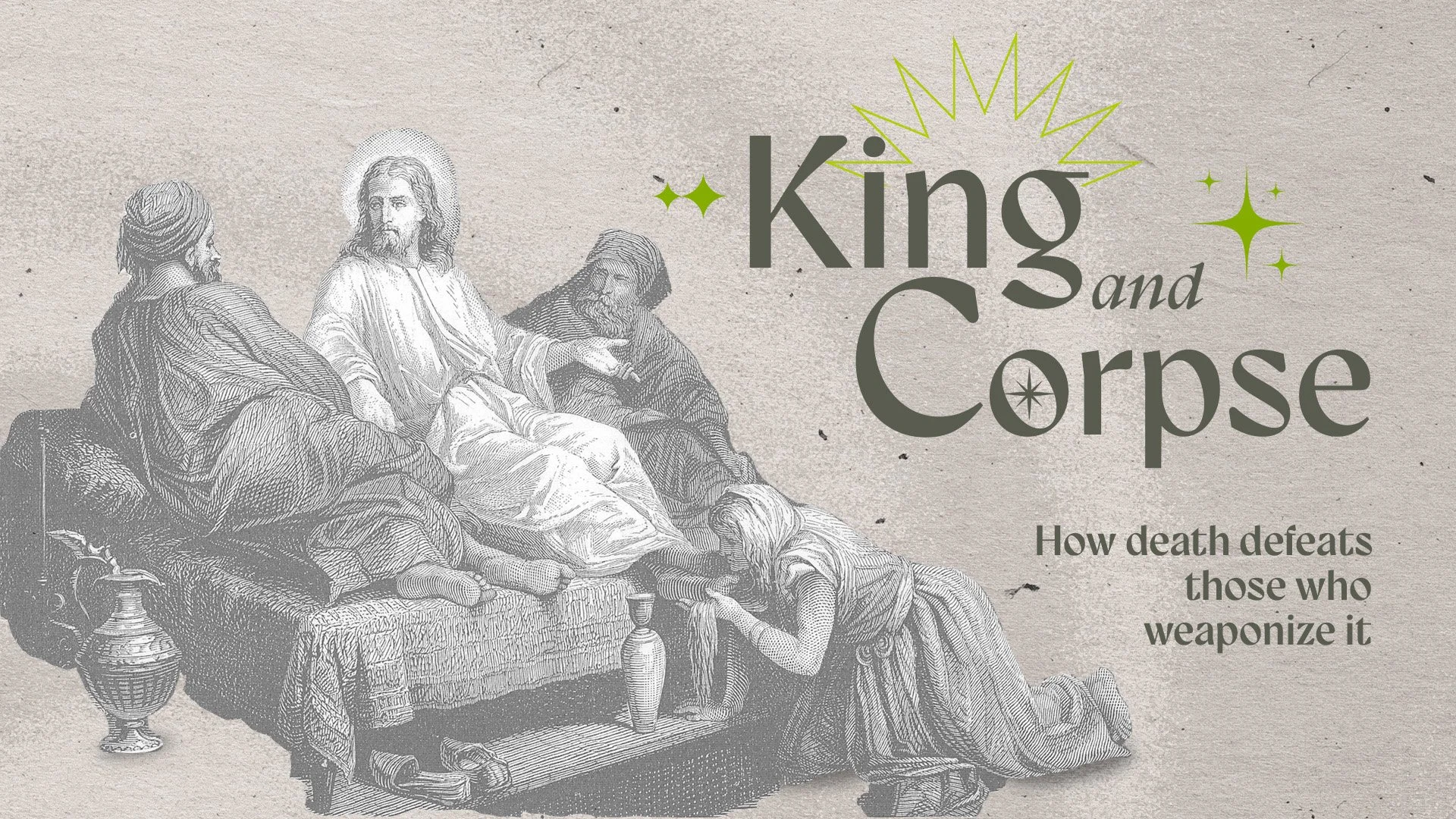
Mary, the sister of Lazarus, the man who has just been raised from the dead by Jesus (11:1-44), takes a jar of perfume that is likely worth a year’s wages and pours it over Jesus’ feet. It is an act that recognizes Jesus’ kingship and glory on one hand, and his service to the world and God's clear mission on the other: Jesus is both the Son of Man and the Son of God, crowned in greatness but elevating (literally “raising” in Lazarus’ case) those suffering and suppressed with his position. (An important note: The “Son of man” references strongly link Jesus to the eternal humanlike figure who inherits kingship in Daniel 7, and the “Son of God” references link him to God’s son in Psalm 2. This is prophetic language.)
There’s an Ebeneezer Scrooge-like character in the story, Judas Iscariot, who finds the symbolic anointing act wildly impractical and a waste of resources. Of course, John tells us plainly that Judas is Jesus’ betrayer, so we know right away that stewarding resources isn’t actually his concern: He could not care less about Jesus receiving honor and glory, as Judas is the one who will usher in immeasurable shame upon Jesus and use God’s resources to benefit himself. In a sense, he is the antithesis of Jesus in this story: Where Jesus uses his power and glory to elevate others (Lazarus, the lame man at the pool, the blind man, the 5000 hungry listeners, the official’s son), Judas uses his access to Jesus for the complete opposite.
But all of this leads us to something truly beautiful in the narrative, yet kind of hard to see unless you zoom out and remember the macro picture of the gospel of John. All the cues are given to us in the prologue: Jesus is YHWH, the God of the Cosmos, who entered His creation and intentionally made Himself vulnerable to elevate us to intimacy with Him (Phil. 2:5-11). He comes in a way where His glory can be observed, “The Word became flesh and dwelt among us. We observed his glory, the glory as the one and only Son from the Father, full of grace and truth” (John 1:14). Yet many people don’t notice this glory at first, and some never do: “He was in the world, and the world was created through him, and yet the world did not recognize him” (1:10). The author of John’s gospel warned us that Jesus is truly the full glory of God wrapped in flesh for our sake, but people don’t recognize Him and often completely miss what the source of His glory is.
Let’s jump back to John 12: Jesus rebukes Judas for completely missing the point, but Jesus doesn’t correct him by saying, “I’m God, king of the universe, and I deserve all the kingly glory that comes from this lavish display of adoration.” Now, don’t get me wrong: this is absolutely a kingly, worshipful display, and Jesus does not reject it as such; he deserves every bit of it and more. But Jesus addresses an entirely different kind of glory: He says, “Leave [Mary] alone; she has kept it for the day of my burial. For you always have the poor with you, but you do not always have me” (12:7-8).
Jesus addresses and praises the act of anointing his feet, but says it’s for his burial.
Not to elevate him on his kingly throne, not to inaugurate his kingdom, not to ignite a chorus of universal worship—even though all of those things are certainly at play and on the table here.
The lavish display of worship finds fulfillment in his death.
What?
New Testament scholar Edward Klink perfectly coined this narrative: He says Jesus is anointed as both “King and Corpse.”
This is where the narrative really hits, and where King and Corpse weave this beautiful truth into a garment that covers you and me forever.
Kings are anointed for coronation.
Corpses are anointed for burial.
The road to glory is trodden through death.
Not instead of death.
Not around death.
Not in spite of death.
Through it.
John merges these two realities together. Scholars often note that John is reframing kingship itself here:
Jesus is not crowned first and killed later; He is enthroned through death.
Christians in the modern era have, in my humble opinion, lost sight of this. The very first gospel, the protoeuangelion, declared this reality in Genesis 3, when God told the serpent his head would be crushed, but man’s heel would be bruised. That bruising is physical, tangible death. But physical death for those who belong to the kingdom of God itself becomes the crushing and triumph over evil, accomplished in Christ first, the forerunner who prepares the way for us (Heb. 6:20).
I’m not surprised the modern Christian view of death has shifted. The mid-nineteenth century saw some of the most frightening encounters with death in America: Cholera pandemics, Yellow fever outbreaks, Tuberculosis deaths across cities, and the Civil War, where around 750,000 people died, entire communities were devastated, families lost multiple sons, and the afterburn of battlefields looked apocalyptic. It’s no wonder William Miller promised people the rapture would happen between 1843 and 1844: Everyone wanted to escape death, and that spirit of fear hasn't loosened over the last century and a half.
But the early Church did not see death as defeat; they saw it as participation in Christ’s victory. Ignatius of Antioch saw death as the culmination of being truly united with Christ: “When I suffer, I shall become a freedman of Jesus Christ, and I shall rise free in Him” (Letter to the Romans: 6). Ignatius recognized what John is preaching, that Jesus is crowned as he’s killed. This finds even greater emphasis in the very next narrative when Jesus triumphantly enters Jerusalem and is celebrated by Galileans while being snubbed by Jewish elites. The Roman parousia (arrival) was an imperial display of power and glory: Caesar would receive a royal procession where he rides through the city gates on his war horse, touting his captives behind him in chains and proving his mighty victory.
But now, juxtapose that image with Jesus and his parousia:
Roman Triumph Jesus’ Triumph
War horse Donkey
Military victory Coming crucifixion
Captives displayed King who will die
Jesus rides in on an animal that symbolizes peace rather than war. He suffers under the violence of Roman crucifixion rather than inciting his own violence, but in doing so, he militarily conquers the spiritual powers of evil. He doesn’t display Roman governors or the Sanhedrin in shame behind him, but instead takes on all their shame at the cross, shaming evil and rebellious principalities instead (Col. 2:15). He truly is both King and Corpse, and disarms death by walking through it to resurrection. Through death, Jesus defeated the one who has power over death (Heb. 2:14-15). This is the very reality John’s gospel is preparing us for.
You might be reading this and thinking, “Joey, stop glorifying death. It’s evil and bad, and it hurts terribly.”
Yes, I agree. Death is an enemy, even personified as an evil being in the Old Testament, and it will be destroyed at the next great arrival of Jesus, the parousia. My point, and John’s point, and the apostle Paul’s point, and the prophet Hosea’s point, and the prophet Isaiah’s point (1 Cor. 15:55; Hos. 13:14; Is. 25:8), is that death has no sting, no power, and no reason to cause fear. Death is the operation through which death itself becomes life. It is entirely subverted for God’s glory.
Death has been swallowed up in victory. Where, O death, is your victory? Where, O death, is your sting?
So dear Christian, do not fear death. Remember the perfume at the feet of Jesus, where preparation for death was the coronation of the God of the universe, who paved the way for you to spend eternal life with Him in His new creation.

Reading Paul: The New Perspective and why it matters.
For centuries (pretty much since the Protestant Reformation), ancient Judaism was viewed as a “works-based religious system.” This means that if faithful Jews followed/obeyed God’s law (given to the Jewish people at Mount Sinai), they essentially “earned” God’s promises of provision, favor, and rescue in times of need. In other words, if we follow all the rules, we legally earn our right to freedom and blessing. Scholars also looked at Romans 7:7-25 and believed Paul was saying, “No one can actually follow the Law perfectly; it’s too challenging. If obeying the law is how we all get to receive God’s goodness, we’re all doomed because we just can’t.” Paul’s letter to the Romans seems to provide the antidote to this problem by contrasting “good works” that merited God’s favor with grace through Jesus Christ, a greater avenue for God’s favor.

Some topics in biblical scholarship rarely, if ever, make their way outside of academic circles into the lives of everyday followers of Jesus. This breaks my heart.
I get it, I do.
But sometimes, these topics quite literally revolutionize the way the present-day church reads the bible, which will, in turn, transform Christian communities, worship services, prayer verbiage, outreach, and numerous other life elements for the people of God.
The New Perspective on Paul is one of those beautiful discoveries that rarely leaves academic circles but sheds light on some common misunderstandings about God’s mercy and the purpose of the Old Covenant (specifically, the law).
This is my attempt to share some of the deeply valuable truths that came out of the New Perspective on Paul conversations over several decades and why this understanding can enrich your depth of love for God and scripture.
**Disclaimer** Many will take issue with my attempt to reduce this topic to such a narrow scope and explain it so minimally; however, I believe that in this brief overview, I have maintained the integrity of the arguments and have not misrepresented perspectives on Paul in my attempts to simplify and sum up the discussion.
“The Problem of the Law” in Paul.
For centuries (pretty much since the Protestant Reformation), ancient Judaism was viewed as a “works-based religious system.” This means that if faithful Jews followed/obeyed God’s law (given to the Jewish people at Mount Sinai), they essentially “earned” God’s promises of provision, favor, and rescue in times of need. In other words, if we follow all the rules, we legally earn our right to freedom and blessing. Scholars also looked at Romans 7:7-25 and believed Paul was saying, “No one can actually follow the Law perfectly; it’s too challenging. If obeying the law is how we all get to receive God’s goodness, we’re all doomed because we just can’t.” Paul’s letter to the Romans seems to provide the antidote to this problem by contrasting “good works” that merited God’s favor with grace through Jesus Christ, a greater avenue for God’s favor.
In 1977, a scholar named E. P. Sanders challenged this understanding. In his famous work Paul and Palestinian Judaism, Sanders argued that ancient Jewish law functioned within a covenant framework where God is gracious and merciful, providing rescue through repentance and sacrifice. Sanders pointed out (correctly, by the way) that ancient Jews never believed the law could exist apart from God’s grace and mercy, and thus Jews never believed that people could be “saved” (or protected and blessed by God) simply by obeying the law. Sounds good, right? We focus so much on how the law falls short of what we need that we forget the Bible is riddled with promises in the Old Testament where God always made it clear; His grace and mercy make up for where we fail the Law. So Sanders gives us a “new perspective” from which we view God’s Law and covenant that recovers things lost over time.
Here’s the rub though.
Paul seems to contrast the Law of Moses with the grace of Jesus Christ (Rom. 9:30-10:13). Paul makes it sound as though Jewish Christians are seeking their own righteousness through the Law, but not through grace and mercy. How is this possible if the Law includes God’s grace and mercy? There’s a contradiction here. Paul even says, “No one will be justified in his sight by the works of the law” (Romans 3:20a; see also Galatians 2:16, 3:10). Paul makes it sound as though God’s law requires perfect obedience for it to work. And since no one can perfectly obey, it doesn’t work.
Hang on. Keep reading.
Sanders decides in his book that because ancient Jews did not believe the promises of God were earned by good works, apart from His grace, then Paul’s theology is self-contradictory, heavily un-Jewish, and in conflict with the Old Testament.
You’re thinking, “So this guy decided that Paul, the author of most of the New Testament, has bad theology‽”
Yeah… Hence the phrase “The problem of the Law in Paul,” which showed up in academic circles.
Okay. So what are the solutions to this problem in the New Perspective?
Real quick, and stay with me here.
There were a few solutions presented over the last few decades that scholars offered to this supposed problem with Paul’s theology.
A renowned scholar, James Dunn, is actually the guy who coined the term “The New Perspective.” He argued that Paul’s “works of the law” do not mean moral commands of the Torah (first five books of the Old Testament) but only Jewish ceremonial markers, specifically circumcision, food laws, and sabbath keeping. Said differently, the things that made a person Jewish in a pagan world are the things that make a person right with God, according to Jewish opponents of Paul, and therefore, gentile Christians (and everyone else) cannot be included in God’s covenant. According to Dunn, Paul was just pushing back against this specific teaching but was not rejecting God’s Old Covenant entirely.
This perspective has been somewhat debunked over time. The biggest reason why? Paul is definitely talking about both Jews and Gentiles (Rom. 1:18-3:20) and specifically refers to moral works of the Law as well (Rom. 4:1-8). Paul cannot be referring only to pious Jews when all mankind is referred to as being “under sin” (3:9-20).
Other solutions were offered, and they created new problems instead of solving old ones.
So what is the answer?
Ready?
Psalm 143.
Read it.
Paul is actually quoting from Psalm 143:2 in Romans, “No one alive is righteous in your sight” (CSB).
The psalmist believes it is impossible to be righteous before God apart from God’s covenant promise of mercy. The source of God’s mercy is not the Law or the sacrifices offered; it is God’s “covenant love and truth” (Exod. 34:6-7; Ps. 25:10, 40:11), and when the psalmist responds to God’s heartfelt love and mercy, he chooses to obey God. This means that in ancient Jewish thought, God always planned on human beings not measuring up, having them approach him with repentance, and forgiving them because He is merciful, something He promised to be within His intimate covenant relationship (Psalm 143:1, 6, 8, 9). In this view, God’s mercy is not a response to sacrifices and rituals. Instead, sacrifices and rituals are a response to God’s mercy.
To recap: Where Sanders was correct -
Israelites never believed they could be saved by works alone. They always believed in God’s mercy to save them. Christians misrepresented Judaism for centuries by assuming otherwise.
Where Sanders missed the mark -
Paul was not being incoherent or contradictory and was not misrepresenting ancient Jewish theology.
Paul was pointing out to all human beings that God’s grace and mercy are not a response to good works. Instead, God’s grace and mercy draw human beings into obedience and deeper love, and there is no obedience and good works outside of covenant love with God (See also Psalm 130:3-4; Isaiah 59:1-15; Daniel 9:4-19).
It is impossible to “observe the law” outside of the gracious framework of God’s covenant promises.
Okay, Joey, why does any of this matter? This sounds like it could have stayed in academic circles.
Here’s why it matters.
Many Christians misunderstand the Bible and think it teaches that God used to force people to try to obey laws they could never obey, just so he could guide them into wanting to accept grace through Jesus. In actuality, people in ancient cultures would have become very good at following laws like this. We blow out of proportion the difficulty of following the Mosaic Law. Paul himself points out how successful he was at being a law-following Pharisee (Philippians 3:4-6). Obeying the law is not Paul’s issue, and we are grateful to Sanders for pointing this out to us. Israel always believed that God’s promises needed His mercy for when the people veered into idolatry and made mistakes.
Now we know that the issue Paul was addressing is that many people believed they could obey the law of Moses apart from being in a loving, committed relationship with God Himself. Paul states that this simply isn’t possible because it is God’s loving grace that makes God’s Law profitable in the first place (Rom. 3:21-23), and that grace has now been perfectly revealed in Jesus Christ (Rom. 6:23).
In the end, ancient Jews did not believe good works could save them without God being merciful. They did, however, believe God’s mercy was a failsafe for sin, and Paul set the record straight: All those who confess Jesus is lord are, in fact, saved by God’s law, because God’s law always depended on Him being merciful first, and sought our obedience second (Rom. 10:9-10).
By the way, biblical scholars Frank Thielman, Andrew Das, Jean Noel Aletti, and N. T. Wright are to thank for these beautiful solutions to “the problem of the law in Paul” proposed by E.P. Sanders.
Okay, that was longer than I wanted it to be. But now you can appreciate what the apostle Paul did for us in the New Testament, and hopefully, you have a more robust understanding of God’s beautiful grace, the Law of Moses, and how Christ perfectly fulfilled it all.

Sexual Immorality, the Human Body, and Community Holiness.
It all begins with an idea.
Paul’s first address to the church in Corinth articulates a unique theology of the human body and its purposes in God’s inaugurated kingdom on earth. In examining 1st Corinthians 6:12-20, Paul addresses boundaries and abuses of freedom in the Christian life (6:12-13), God’s purpose for the human body in Christ (VS 14-20), the sinful practice of sexual immorality against both the body and the Lord (VS 14-18), and communal holiness for the collective church as Christ’s body (15-20). This paper will endeavor to explain and support the position that Paul’s theology of the human body, explicitly expressed and supported in this passage, was unique in Paul’s day and is coherent and consistent within greater Pauline literature. It will begin by addressing the wider issue at stake in Paul’s entire letter to the Corinthians.